What Is The Inclusive Mainstream Fund?
Every mainstream primary and secondary school in England is receiving new, ring-fenced government funding to support inclusion. The first payments land in June 2026. By 31 December 2026, every school must have published a statutory inclusion strategy. This post explains what the fund is, how much your school is likely to receive, what the DfE expects you to spend it on, and how to approach the December deadline without it becoming another burden on your to-do list.
A Quick Overview for School Leaders
The Inclusive Mainstream Fund (IMF) is a new £400 million per year funding stream for mainstream primary and secondary schools in England. It was announced in the February 2026 Schools White Paper, Every Child Achieving and Thriving, and runs for three years as part of a wider £3.4 billion SEND reform programme.
The fund is ring-fenced. That means it cannot be absorbed into general school budgets and must be directed toward inclusion. The DfE has set out 7 inclusion themes as the framework for how the money should be used.
Payments go directly to academies from DfE, and to maintained schools via their local authority. Both receive a single annual payment, starting June 2026. Schools will receive this amount for 3 years.
How Much Will Your School Receive?
The allocation is calculated using a formula based on four components drawn from the National Funding Formula:
- A lump sum of £3,000 paid to every school, regardless of size
- A basic per-pupil rate of £16 for primary schools
- A per-pupil rate of £79 for pupils with low prior attainment (LPA), applied to the proportion of your cohort who qualify
- An area cost adjustment (ACA), which uplifts the total to reflect higher labour costs in certain parts of the country
The national average allocation for primary schools is around £14,000 per year. Secondary schools receive more, averaging around £48,000, due to larger cohort sizes and higher LPA weightings.
Your school’s SENCO or Business Manager can calculate your precise allocation using your actual pupil count and LPA proportion from your authority proforma tool data.
What The December Deadline Requires from Schools
The inclusion strategy is not a new concept for most schools. You may already be doing much of this work, but there are likely some pieces that you need to add to your current provision to meet the statutory requirements. The deadline requires that you document it, map it to the 7 themes, and publish it as an Inclusion Strategy.
For schools that already have a structured whole-school approach to children’s wellbeing and inclusion, the audit stage will often reveal more coverage than expected. There will likely be some areas that need strengthening but an audit is the right place to start.
How myHappymind Schools Are Already Ahead
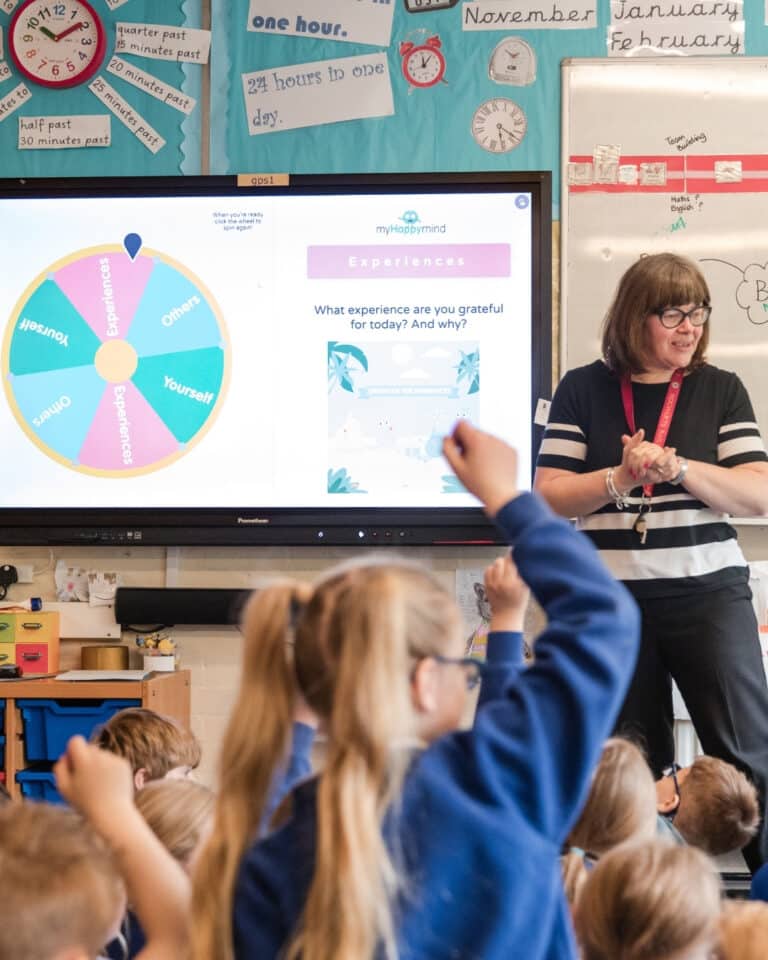
If your school uses myHappymind, you will be delivering against many of the inclusion themes through our existing programme already.
The whole-school approach to children’s mental health and wellbeing, the shared language and classroom routines, the evidence base validated by NHS and Centre for Mental Health partnerships, the specialist toolkits for transitions and emotionally based school avoidance, and the family app all map directly onto the DfE’s inclusion framework.
That matters for two reasons. First, it means that some of your IMF strategy documentation is already in place. Second, it means the funding is available to formalise and build on work your school is already committed to, rather than starting from scratch.
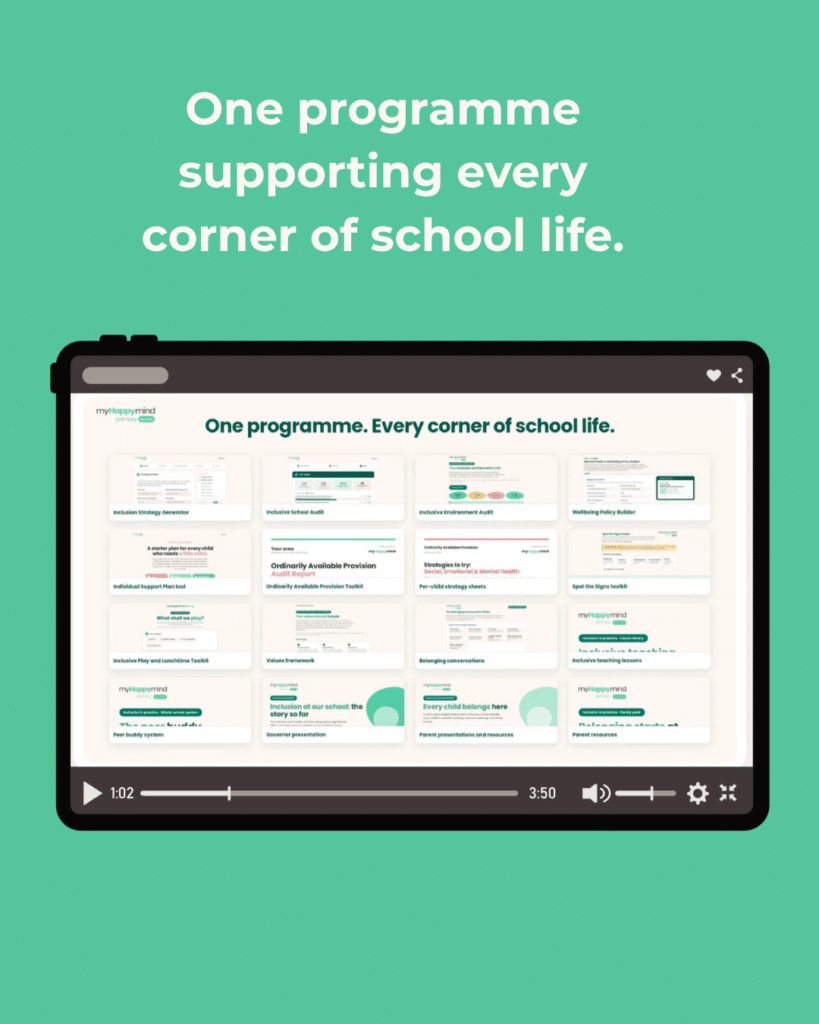
For schools that want a solution that gives them full coverage against all of the 7 themes then you will love myHappymind Belong, our new dedicated inclusion programme. It delivers against the 7 themes, provides the strategy documentation, staff training, and specialist resources that sit alongside our core myHappymind programme. The cost represents a small proportion of a typical school’s IMF allocation, leaving the majority of funding available for other inclusion priorities such as classroom adaptations, TA training, and family engagement work.
Introducing myHappymind Belong
For schools that want a solution that gives them full coverage then you will love myHappymind Belong, our new dedicated inclusion programme delivers:
- Against the 7 Department for Education inclusion themes
- The complete strategy documentation required for December 2026.
- Staff training
- Specialist resources
- Sits alongside our core NHS-backed wellbeing programme.
How much of my school’s IMF funding would this use?
The cost represents a small proportion of a typical school’s IMF allocation, leaving the majority of funding available for other inclusion priorities such as classroom adaptations, TA training, and family engagement work
Complete the form and
watch the overview
watch the overview
What To Do Now
The schools that find December straightforward will be the ones that go into September with a clear picture of their current provision, a strategy template ready to populate, and the right programme in place to cover any gaps.
Whether your school already uses myHappymind or you are exploring it for the first time, a quick conversation is the right starting point. We can show you your school’s exact IMF allocation, walk you through how your provision maps to the 7 themes, and share the strategy template that takes the bulk of the December workload off your desk.
Already a myHappymind school? Contact your Customer Happiness Manager or email hello@myhappymind.org to get started.
New to myHappymind? Book a call with our friendly team today:

Natalie Harrison
Head of New School Relationships
Sources and Further Reading
FAQs About the Inclusive Mainstream Fund
The headteacher and SLT, working with the SENCO and Business Manager. The DfE has not pre-approved specific suppliers or programmes. Schools are accountable to governors and to Ofsted for how the funding is directed and documented.
Yes. The IMF is new, ring-fenced funding created specifically for this programme. It sits alongside existing notional SEND budgets rather than replacing them.
The 7 themes that every school’s inclusion strategy must address are:
- Ambitious leadership and governance
- Evidence-based support prioritising early intervention
- High-quality teaching for all learners
- Accessible enriching provision beyond the classroom
- Safe and respectful culture fostering belonging
- Strong partnerships with families and wider services
- Inclusive environments with continued accessibility
Your inclusion strategy must show how your school identifies and meets common SEND needs in your cohort, how everyday teaching embeds inclusion, and how you are addressing each of the 7 themes.
By 31 December 2026, every primary and secondary school in England must publish an inclusion strategy. This is a statutory duty, not a recommendation. The strategy must be publicly available and demonstrate coverage across all seven themes.
Yes. The DfE’s guidance makes clear that schools can use the IMF to fund staff training, specialist programmes, family engagement work, and curriculum resources, provided these are directed toward the seven inclusion themes.
Schools that do not meet the statutory deadline will be accountable to Ofsted and to governors. Given that the inclusion strategy is linked to a significant new funding stream, it is likely to be a focus of scrutiny from the autumn term onwards.