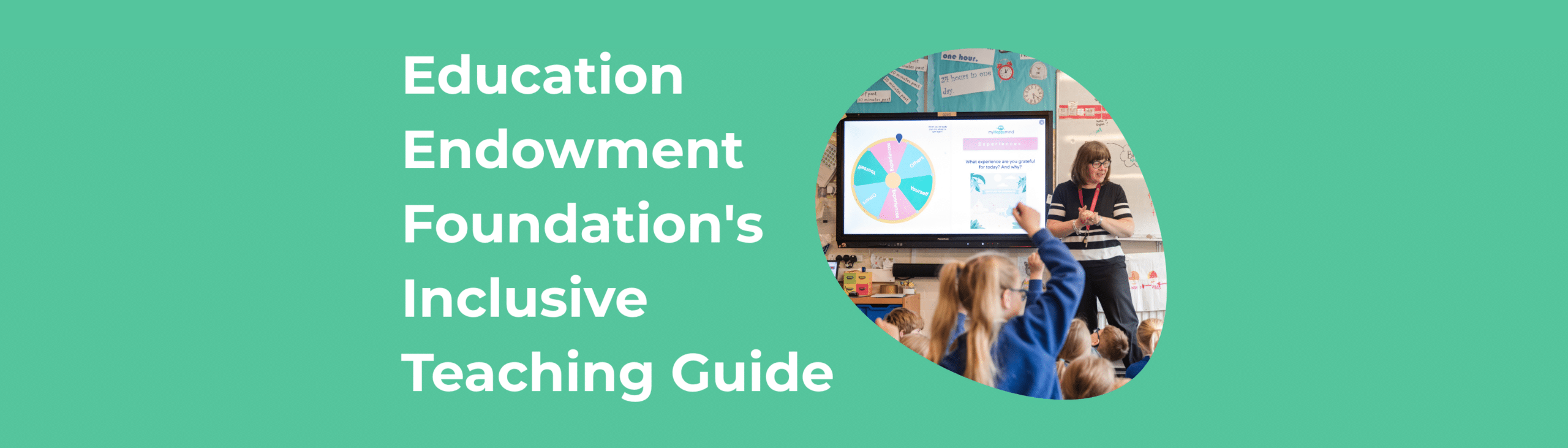
In summary: The Education Endowment Foundation (EEF) has published a Guide to Inclusive Teaching this week. It sets out a two-part model for inclusion: strong universal teaching for every child, plus targeted adaptations for those who need extra support. Every school in England must publish an inclusion strategy by the end of 2026, so the timing matters for school leaders currently planning theirs.
Introduction
Every school in England has to publish an inclusion strategy by the end of 2026. Many school leaders are still working out what evidence-led inclusion looks like in practice, day to day.
The EEF’s new Guide to Inclusive Teaching offers a clear answer. It’s based on evidence that has also played out across more than 2,000 primary schools: inclusion isn’t a bolt-on for some children. It’s the quality of the everyday experience for all of them.
What Has Changed
The EEF has published a new, structured model for inclusive teaching, built around two parts:
- Part one: Universal provision. What every child experiences daily. This turns out to matter most for children with additional needs.
- Part two: Adaptations and extra support. Targeted help for pupils who need it, layered on top of universal provision, not instead of it.
The guide identifies five core universal approaches:
- Explicit instruction
- Effective feedback
- Scaffolding that builds independence
- Positive teacher-pupil relationships
- Calm, predictable classrooms
The guide also includes a clear warning: more adaptation doesn’t automatically mean more learning. Well-intentioned adjustments can:
- Oversimplify tasks
- Lower expectations
- Reduce a child’s independence over time
What This Means for Schools
Two of the five universal approaches work differently from the others.
Explicit instruction, feedback and scaffolding are teaching craft. Schools can build these through CPD.
Positive relationships and calm classrooms can’t be trained into a single lesson plan. They come from whole-school culture, and culture has to be built deliberately.
This is where whole-school wellbeing plays a practical role. When children understand how their brain works, have a daily habit for self-regulation, and hear the same language from every adult in the building, self-regulation becomes part of the normal school day rather than a separate intervention.
For children with additional needs, this matters most. They pay the highest price when an environment is unpredictable or dysregulated.
What Schools May Want to Consider
The guide points to a simple process for schools currently writing their inclusion strategy:
- Audit the universal layer honestly. What does every child get, every day, that builds regulation, relationships and belonging? If the answer depends on individual teachers’ goodwill, it isn’t universal yet.
- Choose adaptations deliberately. Keep expectations high for every child. Design support that builds independence rather than dependence, this is the thinking behind myHappymind Belong, which sits as an overlay on strong universal provision rather than a separate track for some children.
- Write the wellbeing foundation into the strategy itself, alongside the supporting evidence.
These are areas to reflect on rather than urgent actions. There’s time to work through them before the end-of-2026 deadline.
How This Links to Wellbeing and Mental Health
An independent evaluation published in May by the Centre for Mental Health, Supporting a Whole-School Approach to Wellbeing, reviewed evidence from teachers delivering the myHappymind programme in early years settings and primary schools across Bradford, Hampshire and the Isle of Wight.
It found that the programme supports children’s emotional regulation, self-esteem and wellbeing, with a positive effect on pupils, staff and school climate. These findings aligned with earlier independent studies from the University of Chester and Portsmouth City Council, which the Centre described as part of “a consistent and growing body of evidence.”
Two points from that report connect directly to the EEF guide:
- The outcomes match. Emotional regulation, self-esteem and school climate are exactly the ingredients of the EEF’s fourth and fifth universal approaches (relationships and calm classrooms).
- The recommendation matters. The Centre called on the Departments of Health and Education to work together to support whole-school approaches to mental health and wellbeing, aligned with mental health support teams.
Wider evidence reinforces this. In Hampshire, independent analysis found a 37 times return on investment, linked to prevented referrals into CAMHS, mental health support teams and SENCO caseloads, fewer suspensions, and improved attendance for thousands of children.
Key Takeaways
- The EEF’s new Guide to Inclusive Teaching sets out a two-part model: universal provision for all, plus targeted adaptations for some.
- Five universal approaches sit at the core: explicit instruction, effective feedback, scaffolding, positive relationships, and calm classrooms.
- More adaptation isn’t always better. Poorly designed support can lower expectations and reduce independence.
- Whole-school wellbeing approaches directly support the relational and regulatory foundations the EEF describes.
- Independent evidence from the Centre for Mental Health supports a whole-school approach to wellbeing as part of inclusive practice.
In Summary
The EEF has given schools a clear, evidence-led framework for inclusion, and independent evaluation has given that framework further validation. For school leaders writing their inclusion strategy this term, the path forward is straightforward: look honestly at what every child receives every day, keep expectations high when adding support, and build the wellbeing foundation into the strategy from the start.
Frequently asked questions
The EEF has published a new Guide to Inclusive Teaching, setting out a two-part model: universal provision that benefits all children, and targeted adaptations for pupils who need extra support.
There’s no need for immediate action. Schools writing their inclusion strategy ahead of the end-of-2026 deadline may find it helpful to start with an honest audit of their universal provision.
Explicit instruction, effective feedback, scaffolding that builds independence, positive teacher-pupil relationships, and calm, predictable classrooms.
Whole-school wellbeing approaches help build the relational and regulatory foundation that underpins inclusive teaching, particularly the relationships and calm classroom elements of the EEF’s model. Independent evaluation has found this approach supports children’s emotional regulation, self-esteem and school climate.
creditations, and industry memberships. This page lists confirmed wins and current shortlisted entries specifically.