In summary: Facing rising referral numbers and strained budgets, Warrington shifted from reactive to proactive children’s mental health support by commissioning myHappymind across its primary schools. Steve Tatham, former Starting Well and Mental Health Programme Lead in Warrington for Cheshire and Merseyside ICB, who commissioned the programme, argued that many childhood emotional struggles do not require clinical intervention. In his view, both children and the adults around them need a deeper understanding of emotional literacy, along with consistent tools for regulating emotions, building self-esteem and supporting resilience.
Using the Anna Freud Thrive Framework, Warrington jointly funded myHappymind with schools, giving local children the same evidence-based curriculum rather than a school-by-school patchwork. The results: teaching staff could spot and support struggling children earlier without formal referrals, fewer children escalated to specialist services, and families reported children using emotional regulation techniques at home.
Tatham’s takeaway for other commissioners: proactive, school-based support isn’t an add-on, it’s core infrastructure that eases pressure on stretched school staff and wider systems rather than adding to it.
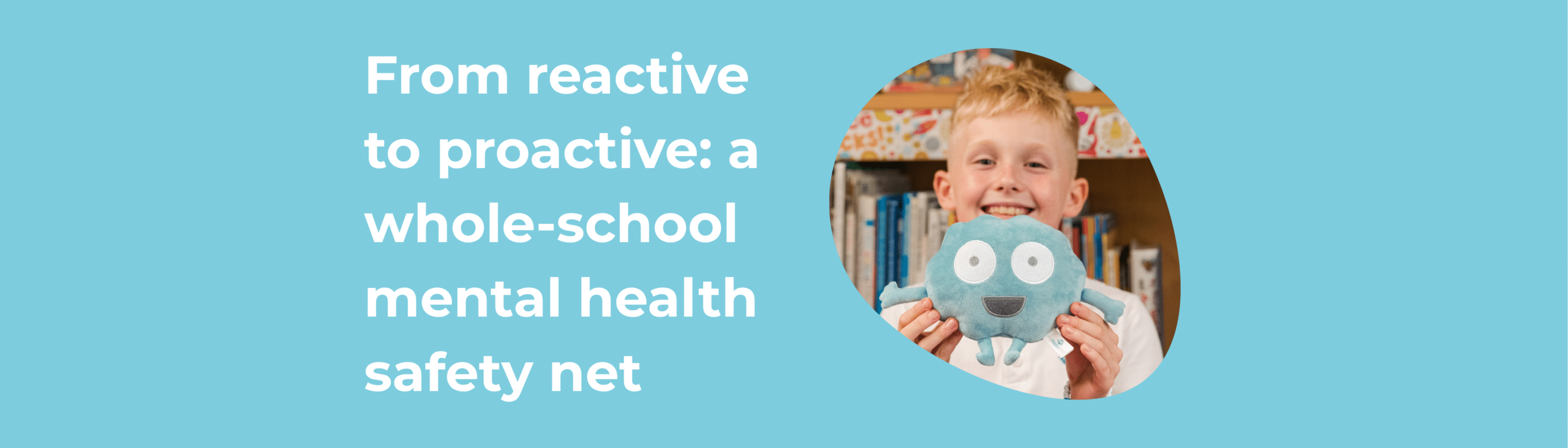
From reactive to proactive: how Warrington built a whole-school mental health safety net
Steve Tatham commissioned myHappymind into Warrington’s primary schools during his time as Starting Well and Mental Health Programme Lead in Warrington for the Cheshire and Merseyside Integrated Care Board.
Every commissioner working in children’s services is looking at the same picture right now. Over one million children now have an active referral to children’s mental health services, a figure that has almost doubled since 2018-19 (Children’s Commissioner, Children’s and Young People’s Mental Health Services June 2026).
For Warrington, the response wasn’t to wait until that pressure turned into a crisis in individual schools. It was to build a preventative layer of mental health support before demand escalated that far.
The problem with reactive commissioning
For years, the default model in most areas has been commission reactive services. Support is commissioned once a child’s needs have escalated far enough to meet a clinical threshold. Tatham says this approach alone was never sustainable, and is even less so now.
“Budgets are under real strain across the system,” he explains. Support in schools such as the national “Mental Health Support Teams” and the “Schools Link” Team model in Warrington is a vital part of the response. However, this is meeting only some of the need with significant growth in the number of children presenting with Special Educational Needs (SEN), particularly around Neuro-diversity. Skills & experience around SEN in mental health teams are variable; staff need training and support to now meet the changing needs of our population. Many times, what we’re seeing in schools doesn’t need a clinical intervention at all. It needs a system that supports children to understand their emotions, build regulation skills, and become more resilient. Ultimately this approach seeks to prevent the escalation of need into specialist services.
He is careful to draw a distinction that shapes the whole strategy. “We have to be wary of pathologising normal human responses to everyday life events. Anxiety, separation, grief – these are big feelings and often overwhelming for children, perhaps even more so for those who are Neuro-divergent. However, badging this as ‘mental illness’ isn’t always helpful or appropriate. What children need is the knowledge, tools and strategies to understand and better manage their emotional health and wellbeing, with trusted adults around them who share that same understanding and can work through it with them.” This sentiment is echoed in the recent Children’s Commissioners Report – Children & Young People’s Mental Health Services (2026) highlighting the needs in schools for ‘A clear strategy for how MHSTs, Experts at Hand and Inclusion Bases will work together to oversee and deliver evidence-based interventions.’
Why Warrington shifted to proactive commissioning
Warrington’s answer was a move to a more proactive, preventative model, delivered through what the area calls its “Thrive” model, adopted from the Anna Freud – Thrive Framework.
Rather than waiting for clinical escalation, the aim was to build a universal layer of emotional support into every primary school, supporting a whole population health approach.
“We served a population of roughly 45,000 children aged 0-18,” Tatham says. “You cannot resource that many children through clinical pathways alone. We needed something universal, consistent, and embedded in the place children already spend a large portion of their day.” Schools play an enormously important role in children and young people’s lives, even more so for those who have or are experiencing adverse childhood experiences (ACEs).
That search led Warrington to myHappymind
For Tatham, the appeal was consistency as much as content. “If you leave every school to build its own approach to emotional health, you risk ending up with a patchwork. Some schools do it brilliantly. Others don’t have the time or expertise. myHappymind gave us a science-backed, structured curriculum that could be integrated into every school in Warrington, so every child gets the same foundation regardless of which school they attend.”
He also points to the role it plays in supporting staff, not just pupils. “Outside of a child’s home, teachers and teaching assistants are often the most consistent trusted adult a child has, especially if home life is chaotic. Giving staff training and a shared language for emotional regulation means they can spot and support a struggling child much earlier, without every concern needing to go through a formal referral. Specialist mental health services can then use their limited resources to provide support where there are significant concerns, supporting planning and formal referrals.”
A genuinely shared investment
Warrington’s model was built as a partnership with schools. Through collaborative commissioning, the ICB worked with Primary Schools to ensure myHappymind would meet their needs.
“That mattered enormously,” Tatham says. “It wasn’t something imposed on schools from above. Schools had skin in the game, which meant genuine buy-in rather than passive compliance.”
That buy-in was helped by strong local advocacy. Tatham credits the Warrington Primary & Secondary Headteacher ‘Leads for Emotional Health & Wellbeing’ who were instrumental in championing the programme across Warrington schools, giving other school leaders confidence to get involved early.
What changed for Warrington
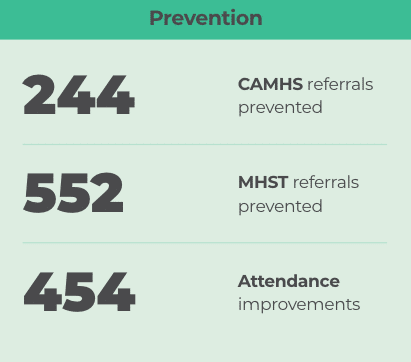
Tatham measured success through a mix of quantitative and qualitative feedback and softer signals. “We had School Leaders telling us they felt genuinely supported through the Thrive Model and interventions such as myHappymind. We had a huge volume of photos, videos and reports coming back from schools, providing positive feedback about the myHappymind programme. Colleagues who were parents also got in touch to say myHappymind was being delivered in their child’s school and their child was now using ‘Happy Breathing’ at home to regulate their emotions. That kind of unsolicited feedback tells you something is working.”
He also points to the combination of reactive and proactive support working together. “When you pair Mental Health Support Teams with a universal proactive tool like myHappymind, schools and their staff feel better supported, and fewer children escalate to require more specialist services in the first place.”
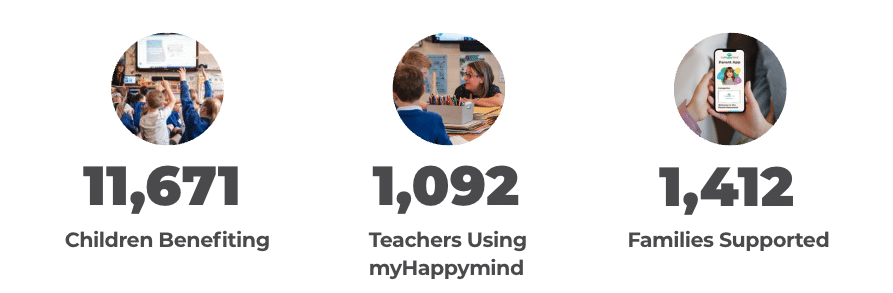
The reach into family life was, for Tatham, one of the more unexpected outcomes. “Because there’s a parent-facing element, families were reporting that they were reinforcing the same language and tools at home. It normalises talking about emotions across the whole family, not just inside the school gates.” That’s not something you would traditionally get as a parent, and this ‘open access’ support platform aligns well with the ‘NHS 10 Year Plan’, ‘Every Child Achieving & Thriving’ and ‘Best Start Family Hubs’ Strategies.
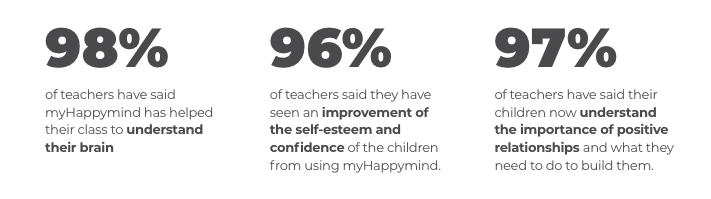
“Having a consistent weekly dialogue around mental health, wellbeing, positive character traits and self-regulation has been seminal in shifting our pupils’ view of themselves and their peers, promoting understanding and empathy.”
Sarah Harman, Deputy Head, Grappenhall Heys Community Primary School, Warrington
What Tatham would tell other commissioners
Asked what he would say to a commissioner considering myHappymind for the first time, Tatham doesn’t hesitate.
“It’s evidence-based, it’s structured, and it works consistently across different socio-economic backgrounds. That last point matters more than people realise. A lot of interventions perform well in one type of school and fall flat in another. This didn’t.”
He also frames it as a direct answer to where national policy is heading. “With the pressure from the Department for Education and NHS England to strengthen prevention before children reach crisis point, locating this kind of support inside schools, where children already are, is one of the most effective ways to respond. It’s not an add-on. It’s core infrastructure for a preventative mental health strategy.”
That matters for commissioners weighing up capacity as much as cost. Schools are already stretched, and any intervention that lands as extra work for already overloaded staff struggles to get buy-in. Tatham argues this is precisely why a structured, ready-to-deliver curriculum works where an ask to “build your own approach” doesn’t. “You’re not asking schools to design something new on top of everything else they’re managing. You’re giving them something structured that staff can pick up and use, which takes pressure off them rather than adding to it.”
The takeaway for commissioners
Warrington’s experience points to a model other areas can adapt: a universal, evidence-based layer of mental health support, jointly funded with schools, sitting alongside (not instead of) clinical services like MHSTs.
The result is a system with fewer children escalating unnecessarily, better-supported staff, and a genuinely shared sense of ownership between commissioners and schools.
If you’re weighing up a similar shift toward proactive, whole-school mental health commissioning in your own area, we’d welcome the conversation.