What The Centre For Mental Health's New Framework Means For Children's Mental Health, and How We're Already Doing It
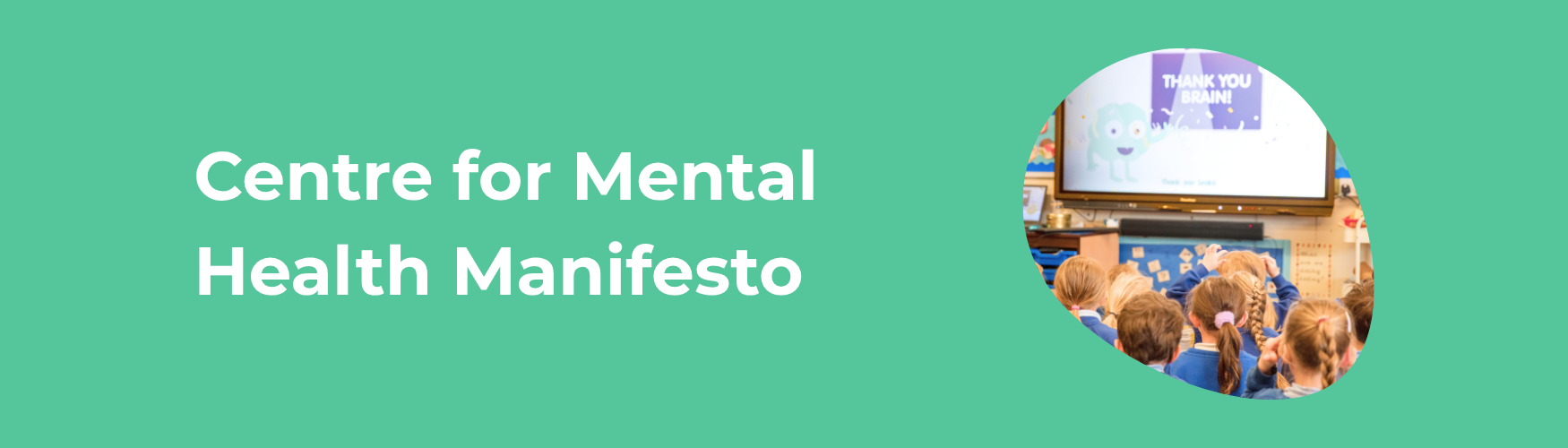
The Centre for Mental Health has published a manifesto for mentally healthier councils ahead of the 2026 local elections. It sets out a 10-point framework asking councils to embed mental health into everything they do, from planning policy to procurement to the support available for children growing up in their communities.
The whole framework is worth reading. But the last three points are the ones that stood out for us.
Points 8, 9, and 10 call on councils to invest in early support mental health hubs for children and young people, champion a whole school and college approach to mental health, and adopt a prevention-focused approach to reducing mental health inequalities. Together, they describe something we’ve been working towards for almost a decade.
Early Support, Not Crisis Response
Point 8 is a direct challenge to the current reality facing children’s mental health services. For too many children, support only becomes available once things have already gone wrong. Early support hubs, the kind of provision that meets children where they are before difficulties escalate, represent a fundamentally different approach. One that treats mental health as something you tend to continuously, not something you treat reactively.
myHappymind was built on exactly this principle. Our programmes give children the knowledge, language, and skills to understand their own minds from an early age. That’s what early intervention actually looks like in practice: not a service waiting for referrals, but a whole-population approach that reaches every child, every day, as part of the school day. Independent analysis found that schools using myHappymind saw a 43% drop in CAMHS referrals [1], a direct measure of early intervention reducing pressure on overstretched specialist services.
The Whole School Approach, Done Properly
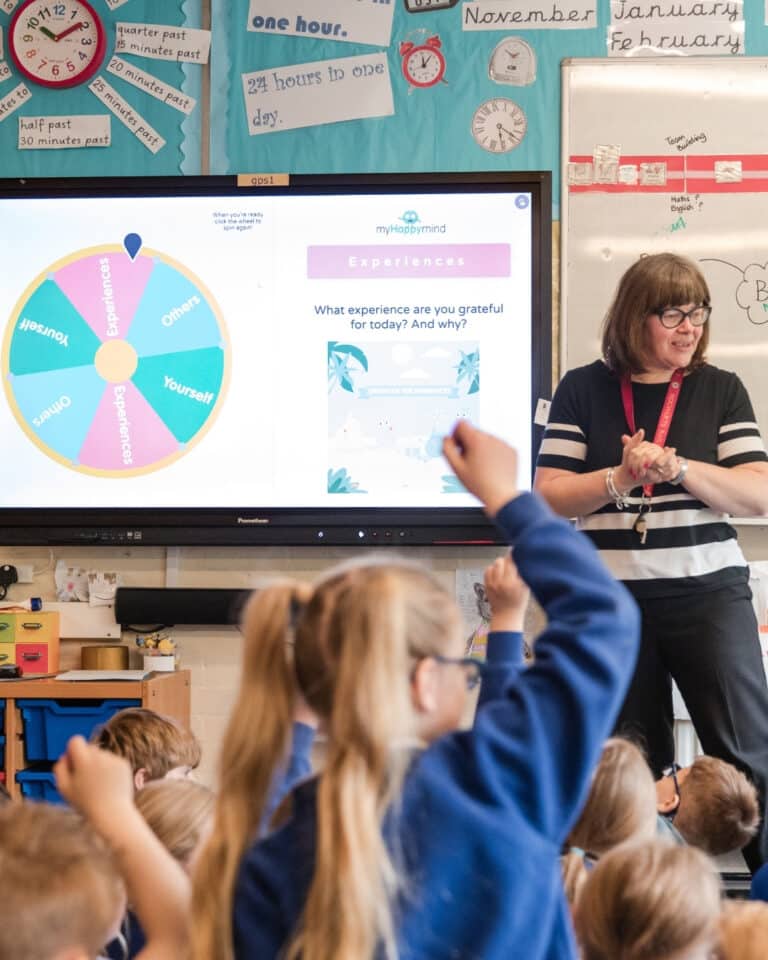
Point 9 asks councils to champion a whole school and college approach to mental health. It’s a phrase that gets used a lot. But genuine whole school wellbeing means more than a PSHE lesson or a mental health awareness week. It means equipping teachers to have confident conversations about mental health. It means giving parents the tools to reinforce learning at home. It means a shared language across the whole school community, children, staff, and families, that makes wellbeing part of the culture rather than an add-on.
That’s the approach we’ve taken with every school and every Early Years setting we work with. The programme isn’t something that sits in one classroom on one afternoon. It runs through the whole school, with dedicated family content to extend the learning beyond the school gates. 100% of schools said their school is now a happier and calmer place [2], and 97% said the programme positively supports their SEN and SEMH pupils [3].
Prevention As The Long Game
Point 10 calls for a prevention-focused approach to reducing mental health inequalities. This is arguably the most important of the three, and the hardest to fund, because the return on investment takes time to show up.
The evidence on prevention is clear. Children who develop self-awareness, emotional regulation, and resilience early in life are better equipped for the challenges ahead. The inequalities in children’s mental health don’t appear in secondary school; they have roots that go back to early childhood. A prevention-focused approach has to start young, and it has to be sustained.
The numbers bear this out. An independent analysis by Portsmouth City Council compared outcomes in myHappymind schools against those without the programme. In schools without myHappymind, suspensions rose by 132% and severe persistent absence by 70%. In myHappymind schools, those same figures were 32% and 38% [4]. Prevention, delivered consistently, changes outcomes at population level.
A Note For Local Council Leaders
If you’re a Local Council leader thinking about how to respond to this manifesto, the question isn’t just what to fund. It’s how to fund something that works at scale across a whole area, not school by school, but as a consistent offer available to every child in your community. myHappymind is designed to do exactly that: a whole-population programme that can be commissioned at area level, deployed across all your schools and Early Years settings, and measured against the outcomes this framework asks you to demonstrate. The whole school model means your investment reaches children, families, and staff together, rather than stopping at the classroom door.
Something We're Proud To Share Soon
We’ve long known, from the schools and families we work with, that myHappymind makes a difference. Soon, we’ll be able to share something more: that has been validated by the Centre for Mental Health themselves. We’re not ready to share the full picture just yet, but we’re proud of what the findings show, and they speak directly to the case these three framework points are making.
If you’re a Local Council leader thinking about how to respond to this manifesto, we’d love to talk. This is exactly what we’re here for.
Footnotes
[1] 43% drop in CAMHS referrals — Hampshire ROI Report, June 2025 (50 schools).
[2] 100% of schools said their school is a happier and calmer place — Hampshire ROI Report, June 2025 (50 schools).
[3] 97% of schools said the programme positively supports SEN and SEMH pupils — Hampshire ROI Report, June 2025 (50 schools).
[4] Suspensions rose 132% in schools without myHappymind compared to 32% in myHappymind schools; severe persistent absence rose 70% in schools without myHappymind compared to 38% in myHappymind schools — Independent analysis, Portsmouth City Council, June 2025.